Technical standard for manufacturers of permanent anchors at height
The European standard UNI EN 17235:2024 represents the technical reference par excellence for the evaluation of anchor devices and safety hooks permanently fixed to buildings and civil engineering structures. These systems are designed to be integrated into the load-bearing structure or roofing layer to prevent and arrest falls from heights, both indoors and outdoors.
Unlike previous standards, this standard evaluates devices not as simple components, but as complete kits, which must also include the specific fastening system for the type of load-bearing structure (concrete, wood, steel, etc.).
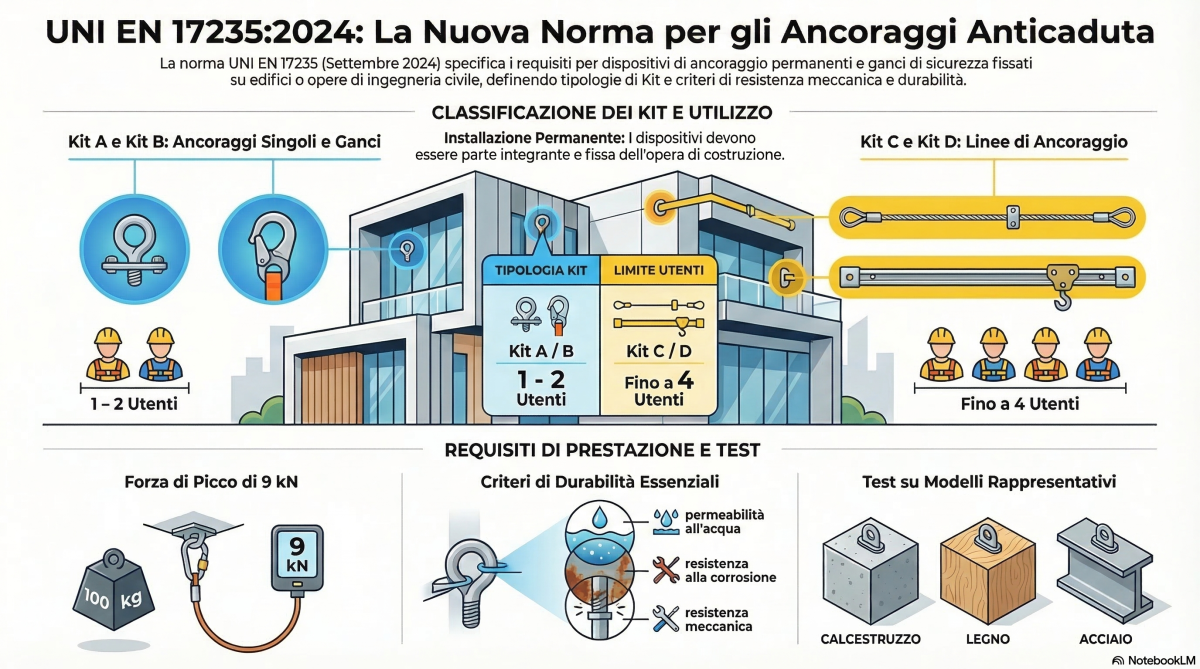
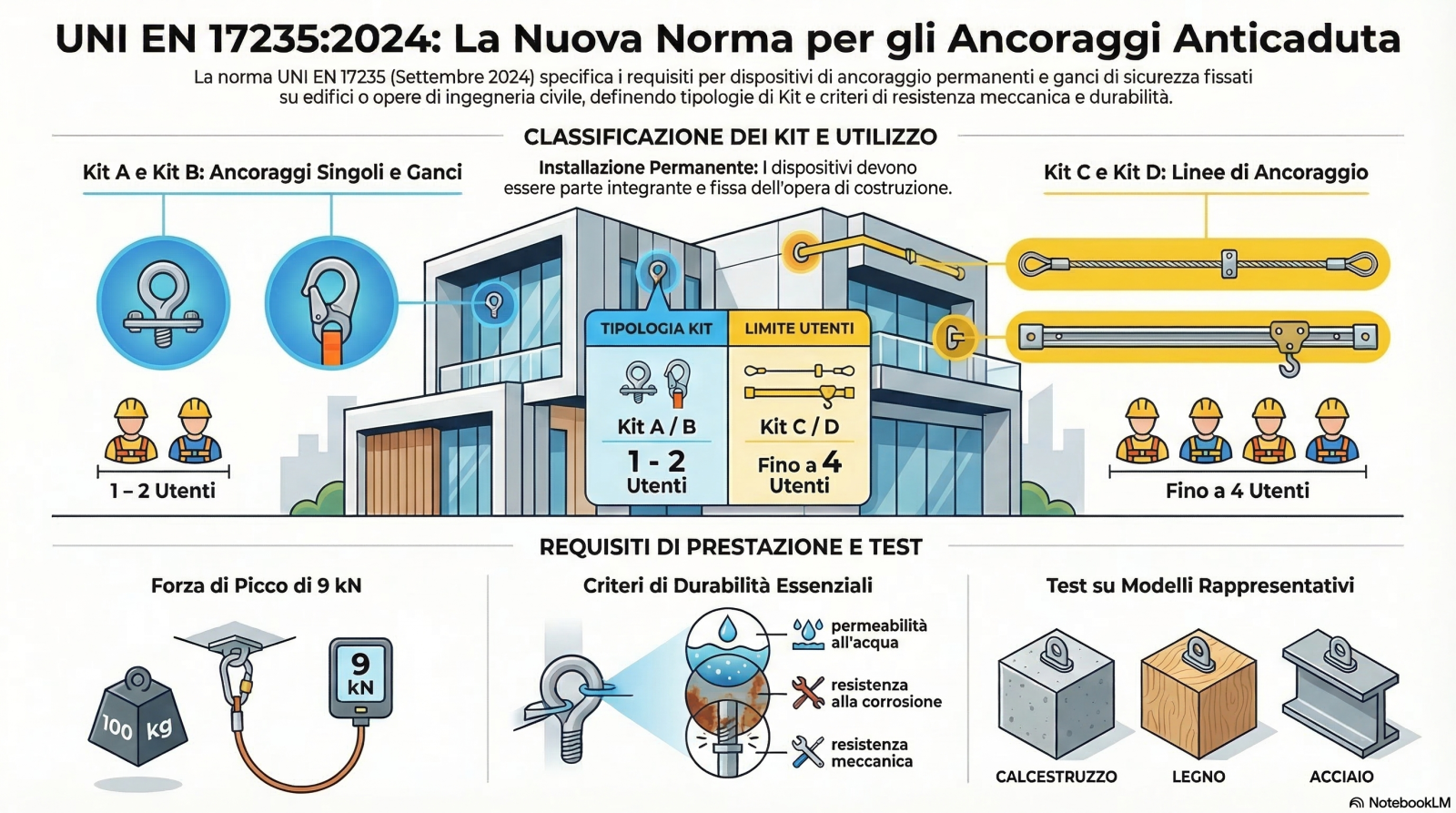
The standard classifies fall arrest systems into four specific kits, defining their load capacities and configurations:
Kit A (Single anchor device): This is the classic stationary, point anchor. This system is Tested and certified to protect one or two operators simultaneously.
For the first time, permanent anchors can obtain the CE Marking. This means:
Uniform criteria throughout Europe
Greater reliability in choosing products
Free circulation in the European market
Attention:The standard is not retroactive: systems already installed do not need to be adapted.
Harmonization date: February 9, 2025
End of transition period: August 9, 2027
The standard introduces performance classes based on the number of operators:
More users = greater loads = more stringent requirements. It's no longer just a matter of choosing the product, but the correct class for the real-world scenario.
To be released to the market, kits must pass rigorous physical tests that simulate the most common use cases. Critical loads (e.g., different load directions or maximum number of users) are tested directly on model roofs or representative structures.
Dynamic Tests (Fall Simulation): The system must absorb the energy generated by the fall of a 100 kg rigid mass, positioned to generate an impact force of 9 kN. For multi-user systems, the test is repeated by releasing additional consecutive masses while the previous ones remain suspended, simulating the simultaneous fall of multiple people.
The standard also addresses the product's life cycle and its impact on the building:
Corrosion resistance: Components must withstand the elements over time. Materials such as stainless steel, aluminum, hot-dip galvanized steel, and specific organic coatings or protective paints are permitted to ensure decades of service life.
Manufacturers are required to establish a rigorous Factory Production Control (FPC). This involves continuous inspection of incoming materials, equipment calibration, and full traceability of manufactured components, to ensure that every single anchor or hook sold guarantees the same lifesaving performance as the laboratory-tested sample. Surveillance by notified bodies is ongoing and includes annual audits and sample testing directly at the factory.
Want to learn more? See our FAQs